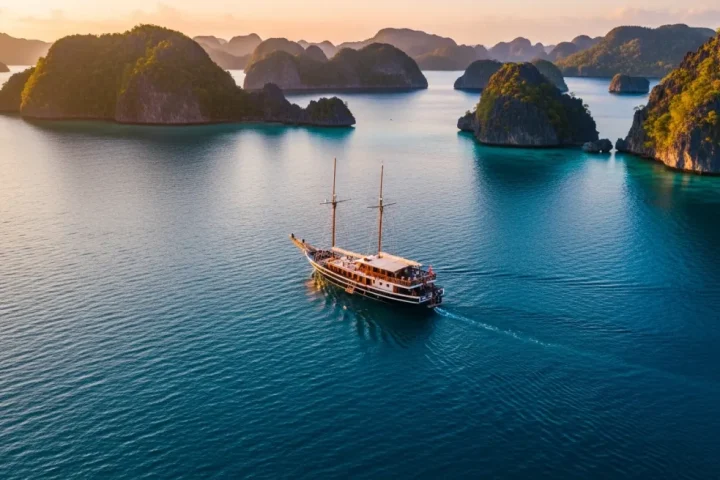
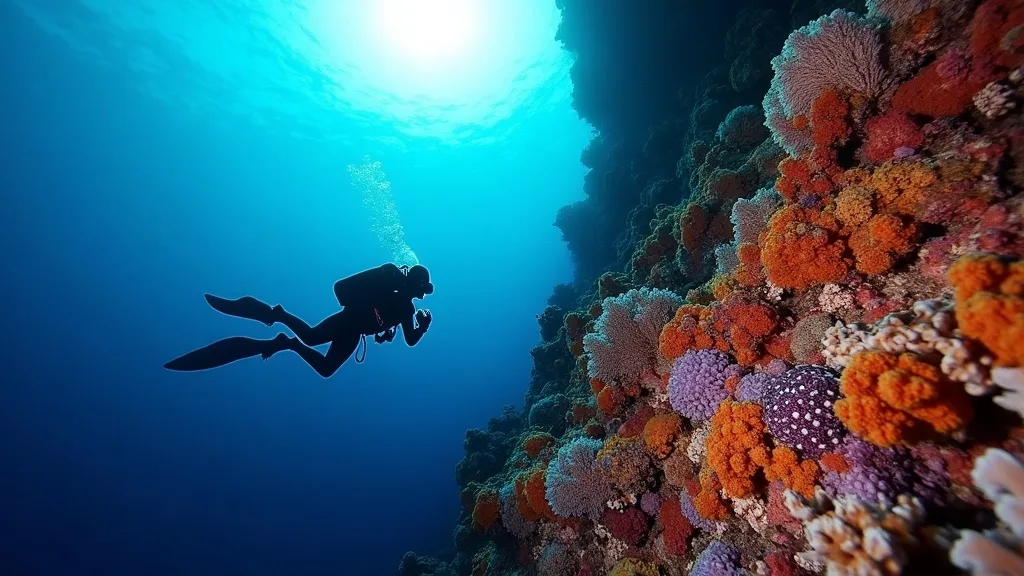
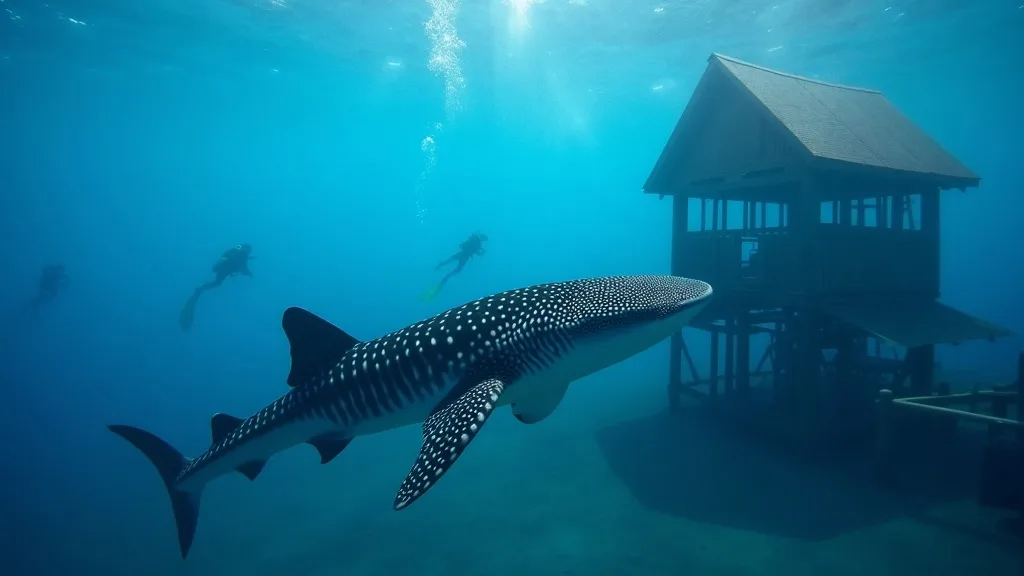
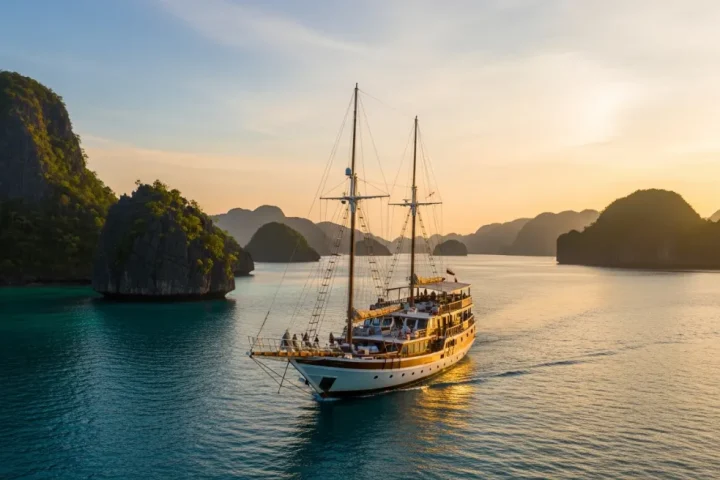
Short answer: Raja Ampat’s sea temperature sits at 27–30 °C every month of the year — 28–30 °C from October to April, 27–28 °C from May to September. Underwater visibility typically runs 15–30 m, with 20–30 m+ common inside the October–April charter season. Most guests are comfortable in a 3 mm shorty; many wear nothing but a rash guard.
How warm is the water in Raja Ampat, really?
Warm enough that thermal protection is a comfort decision rather than a safety one. The Coral Triangle keeps a remarkably narrow band of sea surface temperature here: about 27 °C at the coolest, 30 °C at the warmest. There is no seasonal cold snap, no thermocline that ruins a dive, and no month in which the water becomes unpleasant.
What changes is not the number but your exposure to it. One 45-minute snorkel in 29 °C water is bath-like. Four dives a day for seven days in the same water, much of it spent motionless behind a manta cleaning-station line, is a different proposition — and this is where people get caught out.
What does the sea temperature and visibility look like month by month?
| Month | Sea temp | Typical visibility | Wind & sea | Comment |
|---|---|---|---|---|
| January | 29–30 °C | 20–30 m | Light, occasional squalls | Peak season, warmest water |
| February | 29–30 °C | 20–30 m | Light | Peak season, manta activity strong |
| March | 29–30 °C | 20–30 m | Light, variable | Excellent and quieter than January |
| April | 28–30 °C | 20–25 m | Transition | Last comfortable month of the main season |
| May | 28–29 °C | 15–25 m | SE trades building | Southern crossings get lumpy |
| June | 27–28 °C | 15–20 m | SE trades | Plankton rises, visibility drops |
| July | 27–28 °C | 15–20 m | Strongest SE winds | Most vessels are in Komodo |
| August | 27–28 °C | 15–20 m | SE trades easing late | Coolest water of the year |
| September | 27–29 °C | 15–25 m | Easing | Season begins to turn |
| October | 28–29 °C | 20–30 m | Calming | Season opens, vessels reposition back |
| November | 28–30 °C | 20–30 m | Light | Peak demand begins |
| December | 29–30 °C | 20–30 m | Light, rain showers | Festive weeks, book far ahead |
Two honest caveats. First, visibility in Raja Ampat is operator-reported — there is no official dataset, and any site can turn milky for a day on the wrong tide. Second, air temperature stays at 25–32 °C with 80–85% humidity year-round, so the sun and the humidity, not the water, are what actually tire people out.
What wetsuit thickness should I bring?
For most guests: a 3 mm shorty, or a full 3 mm if you chill easily or plan four dives a day. A lycra skin or rash guard is enough for snorkelling and for single warm-water dives, and it protects you from sun and from brushing hydroids. If you are diving heavily in June–August, when the water dips to 27 °C, a full 3 mm plus a hooded vest is not overkill — repeated immersion is cumulative.
| Your profile | Recommended exposure protection |
|---|---|
| Snorkeller, 1–2 sessions a day | Rash guard + leggings, or lycra skin |
| Diver, 2 dives a day, Oct–Apr | 3 mm shorty |
| Diver, 4 dives a day incl. night dive | Full 3 mm, optional hooded vest |
| Photographer holding position on a station | Full 3 mm — you generate no heat when still |
| Cold-sensitive guest, May–Sep | Full 3 mm + vest, consider 5 mm top |
Why does the plankton that ruins visibility also bring the mantas?
This is the trade-off nobody advertises. Raja Ampat’s manta rays are filter feeders. The nutrient-rich water that reduces visibility from a champagne 30 m to a green 15 m is exactly what draws mantas into the shallows to feed and be cleaned. Ask any guide which conditions they would choose for a manta encounter and none of them will say “the clearest possible water”.
So a season decision is really a priority decision. If your goal is wide-angle reefscapes and the blue-water look, target November to March. If your goal is animal encounters at cleaning stations, some particulate in the water is a feature rather than a fault. Our page on the Dampier Strait yacht charter route sets out which sites work under which conditions.
Does visibility differ between Dampier Strait, Misool and Wayag?
Yes, and predictably so.
- Dampier Strait — the most current-swept of the three. Visibility swings the most within a single day, from 12 m on a running tide at Sardine Reef to 30 m at slack. High fish density means the water always looks busy.
- Misool — generally the clearest during the main season, with soft-coral walls that reward the extra 9–13 hours of sailing from Sorong. More exposed to the southeast swell from May onwards.
- Wayag — the lagoons are shallow, bright and often glassy; the outer reefs are clear but exposed. Wayag is 110–140 nm from Sorong, roughly 14–18 hours under way, so it belongs to seven-night-and-longer trips only.
Guests who care most about photography usually build their week around Misool or the Fam Islands. Guests who care most about maximising water time stay in the Dampier Strait, which is why it anchors nearly every itinerary.
Does the water temperature affect coral health here?
Raja Ampat has fared better than many reef systems, and the local explanation is the same thing that makes the diving good: strong currents flushing the archipelago constantly, mixing water and moderating heat stress. That is not a guarantee of immunity, and marine park rangers monitor bleaching. It is a reason to follow the no-touch, no-anchor-on-coral, reef-safe-sunscreen rules that every well-run vessel enforces.
What should I actually pack, water-wise?
A 3 mm shorty, a rash guard for surface intervals, a hat, and far more reef-safe sunscreen than you think. Bring a thin windproof layer for night passages — 26 °C air at 8 knots on an open deck at 03:00 is colder than the number suggests. If you dive with a computer, note that repeated multi-level days in 29 °C water still load you conservatively; nitrox is widely available and worth taking.
Frequently asked questions
Is the water ever cold enough to need a 5 mm suit?
Rarely. A few cold-sensitive guests diving four times a day in July or August prefer 5 mm, but 3 mm covers almost everyone, almost always.
What is the single best month for visibility?
There is no single winner, but January to March consistently deliver 20–30 m in the central archipelago with the calmest seas.
Can I snorkel comfortably without a wetsuit?
Yes. In 28–30 °C water a rash guard is about sun protection, not warmth. See our snorkelling charter for non-divers for how a week works without a tank.
Does rain ruin visibility?
Heavy rain can reduce surface visibility near river mouths and mangroves, but Raja Ampat’s dive sites are mostly offshore reefs and pinnacles where rain has little effect below a few metres.
Which months do vessels leave Raja Ampat?
Many reposition to Komodo and Flores from roughly May to September. Our month-by-month sea conditions planner for 2027 shows how that shapes availability.
Planning around the water
Pick the month for what you want to see, not for a temperature figure — the temperature barely moves. Charters on this programme are operated by Komodo Luxury, part of Juara Holding Group, which has been running Indonesian phinisi and liveaboard charters since 2015. To talk through timing, exposure protection or a specific vessel’s dive setup, message WhatsApp +62 811 3823 875 or email [email protected].