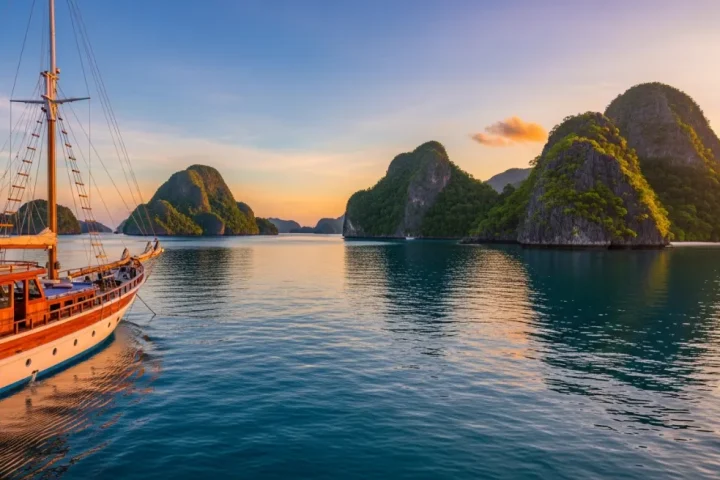
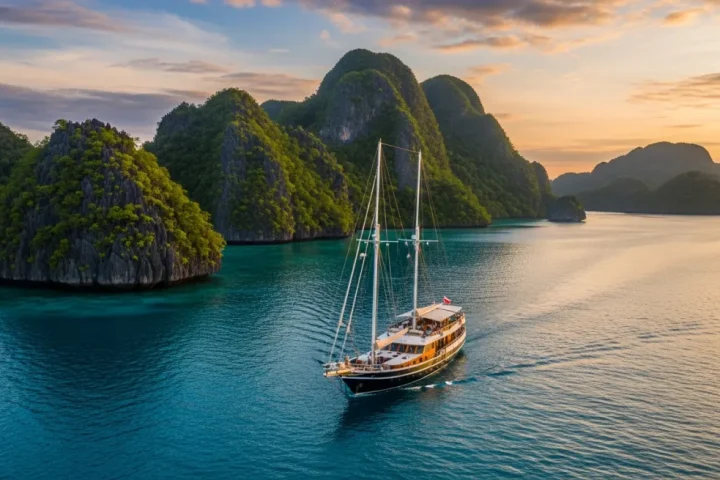
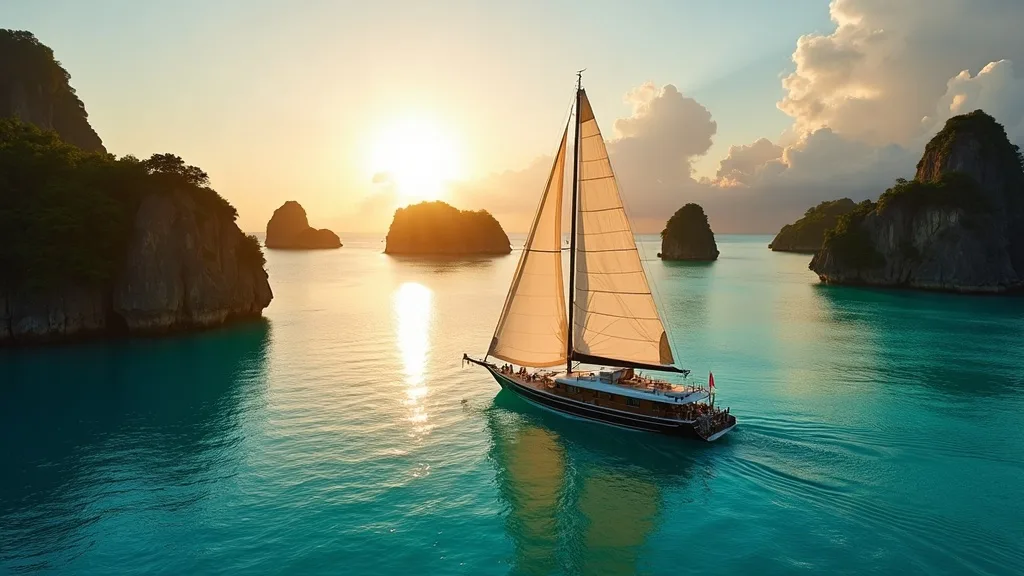
Short answer: Crossings from Raja Ampat to Triton Bay or through the Banda Sea run ten to fifteen nights and are one-way voyages — typically Sorong to Kaimana, or Sorong to Ambon. They are passage-making itineraries with long open-water legs, remote anchorages, days without phone signal, and diving that is different in character from Raja Ampat’s: soft-coral walls and whale-shark platforms in the south-east, volcanic seamounts and schooling hammerheads in the Banda Sea.
The crossings at a glance
| Crossing | Nights | Embark | Disembark | Signature | Best months |
|---|---|---|---|---|---|
| Raja Ampat → Triton Bay | 10–12 | Sorong (SOQ) | Kaimana (KNG) | Soft-coral walls, black-coral gardens, whale-shark bagan platforms | Nov–Apr |
| Raja Ampat → Banda Sea → Ambon | 12–15 | Sorong | Ambon (AMQ) | Volcanic seamounts, hammerheads, Banda Neira | Mar–Apr and Sep–Oct |
| Ambon → Banda Sea → Raja Ampat | 12–15 | Ambon | Sorong | The same route, reversed on the repositioning leg | Mar–Apr and Sep–Oct |
| Raja Ampat + Kofiau extension | 10–12 | Sorong | Sorong | Kofiau’s lightly dived reefs, Misool, southern Raja Ampat | Oct–Apr |
Note the seasonality: Banda Sea crossings cluster in the shoulder months because that is when vessels reposition between the Raja Ampat season (roughly October–April) and the Komodo season (roughly May–September). These are not weekly departures. A given vessel may run the Banda transit twice a year, which is why dates drive the booking rather than the other way round.
What makes an expedition crossing different
Open-water passages. Raja Ampat charters hop between anchorages a few hours apart. On a crossing you will have legs of a full day and night, sometimes longer, out of sight of anything. The vessel needs genuine range, fuel and water capacity, and a hull that behaves in a beam sea.
Self-sufficiency. There is no reprovisioning en route. Everything — food, fuel, spares, medical supplies, dive gas — comes aboard at the departure port. A well-run expedition boat carries redundancy for the compressor, the tenders and the watermaker, because a failure mid-Banda is not a phone call away from resolution.
No connectivity. Telkomsel is absent for days at a time. Many Indonesian liveaboards now carry Starlink adequate for messaging and email, but it is not universal and coverage at sea varies. If you must stay reachable, confirm the vessel’s system in writing before booking.
Remoteness as a medical factor. The nearest recompression chamber to Raja Ampat is in Sorong, with Manado as secondary referral. From the middle of the Banda Sea, that is a very long way. Dive insurance covering evacuation and chamber treatment is not optional on these itineraries — treat it as equipment.
Triton Bay: what you actually go for
Triton Bay, in Kaimana regency, is the soft-coral counterpoint to Raja Ampat’s hard-coral reefs. Walls are draped in dense soft coral and black-coral bushes, with silty, nutrient-rich water that trades some visibility for extraordinary biomass. It is a macro and wide-angle photographer’s destination more than a big-current one.
The whale sharks are the headline. Around Kaimana, whale sharks associate with local bagan — the lift-net fishing platforms — where they feed on baitfish spilling from the nets. Encounters are arranged with the fishermen at dawn. Be clear about the distinction: in Raja Ampat proper, whale sharks are opportunistic and should never be promised. Cenderawasih Bay, further east, is Indonesia’s genuinely reliable whale-shark destination and is a dedicated extension rather than a stop on the way.
The Banda Sea: seamounts, sharks and spice
The Banda Sea crossing is the classic Indonesian blue-water voyage. Isolated volcanic seamounts rise from deep water, drawing schooling hammerheads in the shoulder months; the walls at Nusa Laut and Manuk hold sea snakes in numbers that unsettle people on their first dive there and delight them on their third. Visibility is often the best of any Indonesian region.
Above water, Banda Neira is the reason many guests book the route at all — a small island town of Dutch colonial buildings, a fort, and the nutmeg groves that made it the most contested real estate on earth in the seventeenth century. It is a half-day ashore that reframes the whole voyage.
Vessel and crew requirements
| Requirement | Why it matters on a crossing |
|---|---|
| Fuel and water range | 600–900 nm between reliable bunkering points |
| Motion comfort | Multi-day open-water legs; a light hull makes for a long week |
| Redundant compressors | No workshop within a day’s steaming |
| Two or more capable tenders | Seamount dives need fast pickup in open water |
| Experienced blue-water guides | Negative entries, current lines, surface marker discipline |
| Onboard oxygen and evacuation plan | Chamber is hours away at best |
A typical expedition-capable vessel runs 5–7 en-suite cabins for 10–14 guests with 14–20 crew; larger expedition ships reach 12–15 cabins for 24–30 guests. Indicative all-inclusive whole-boat rates follow the same bands as Raja Ampat — USD 2,500–4,500 per night classic, 4,500–9,000 premium, 9,000–14,000 luxury, 14,000–22,000+ ultra-luxury — but the ten- to fifteen-night duration and one-way positioning push totals well above a standard week. Compare hulls on our luxury fleet page and our expedition yachts page.
Included
Vessel and full crew, en-suite air-conditioned cabins, full board with soft drinks, guided diving with tanks and weights, tenders, kayaks and paddleboards, land excursions including Banda Neira or Kaimana village visits, and transfers at the embarkation and disembarkation ports.
Not included and one-way logistics
Marine park and regional permits, which differ by region — the Raja Ampat PIN card is IDR 700,000 for foreigners and IDR 425,000 for Indonesians, and Triton Bay and Banda levy their own fees; the separately reported 2026 Raja Ampat visitor entry ticket of around IDR 1,000,000 for foreigners, to be confirmed; alcohol; equipment rental and nitrox; travel and dive insurance with evacuation cover; and gratuities of USD 20–30 per guest per day.
Flights need planning. One-way voyages mean you fly into one airport and out of another. Sorong (SOQ) connects from Jakarta, Makassar and Manado, with Jakarta–Sorong roughly four to six hours. Kaimana (KNG) and Ambon (AMQ) have thinner schedules — often one or two flights a day, frequently via Ambon or Makassar. Build a buffer night at both ends. Withdraw cash in the major port: small-town ATMs run dry and reject foreign cards.
Frequently asked questions
Is it rough?
It can be. These are open-water passages, not sheltered island hops, and the Banda Sea is exposed. In the shoulder-month windows when the crossings run, conditions are usually moderate — but anyone prone to seasickness should medicate before the first long leg, not after.
Do I need advanced certification?
In practice, yes. Seamount dives involve negative entries, current and open-water pickups. Most operators require Advanced Open Water plus recent logged dives, and many ask for 50–100 dives on Banda Sea itineraries. Snorkellers can join but will find these routes far less rewarding than Raja Ampat proper — see our non-diver charter page instead.
When do these crossings run?
Banda Sea transits cluster around March–April and September–October, when vessels reposition between the Raja Ampat and Komodo seasons. Triton Bay itineraries run through the November–April window. Dates are fixed by the fleet calendar, so flexibility on your side is worth more than usual.
Will we see whale sharks?
Around the Kaimana bagan platforms in Triton Bay, frequently. In Raja Ampat itself, only opportunistically — do not book on that expectation. Cenderawasih Bay is the destination for a dedicated whale-shark trip.
Can we combine a crossing with a Raja Ampat week?
Yes, and many guests do — a standard Raja Ampat itinerary first, then the crossing. Our 10-night full-archipelago charter is the natural precursor, and Misool sits directly on the southbound route.
How many dives on a 12-night crossing?
Typically 28–36, though passage days reduce the count. Expect three to four dives on anchored days and one or none on long transit days.
What about malaria and health?
West Papua, Kaimana and the Banda islands are all in malaria-endemic regions; travel-health authorities advise prophylaxis and bite prevention. Bring a personal medical kit — pharmacies at these ports are minimal.
Enquire about an expedition crossing
Expedition charters are operated by Komodo Luxury, part of Juara Holding Group, chartering Indonesian phinisi and liveaboards since 2015. Because these are fixed repositioning windows, the first question is always dates — send yours and we will tell you which crossings genuinely fall inside them.
WhatsApp: +62 811 3823 875 · Email: [email protected]