Updated: May 2026
Planning a Raja Ampat Private Yacht Charter in October
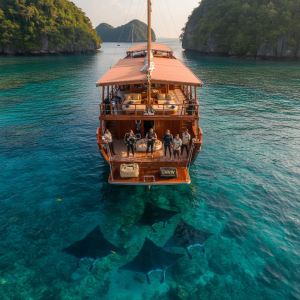
- Prime Manta Ray Season: October sees large aggregations of manta rays at key cleaning stations.
- Shoulder Season Exclusivity: Fewer tourists mean more private access to iconic dive sites and viewpoints.
- Flexible Itineraries: Calm spells allow for exploration of both central and northern Raja Ampat’s remote archipelagos.
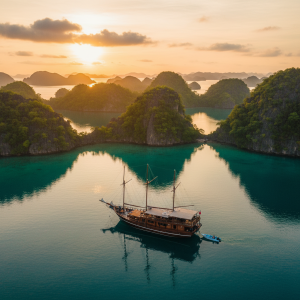
The air is thick, warm, and carries the scent of petrichor from a passing morning shower. From the bow of the Amandira, a custom-built phinisi schooner, the sea is a sheet of polished obsidian reflecting a sky bruised with the soft colors of dawn. A symphony of unseen birds erupts from the dense jungle blanketing the karst island just a hundred meters off our port side. This is the sensory signature of Raja Ampat in October. The water is so clear you can trace the intricate patterns of the coral gardens 15 meters below, a world of vibrant life waiting. This isn’t just a trip; it’s a full-immersion experience, a front-row seat to one of the planet’s last great wildernesses, and planning a raja ampat luxury charter for this specific month unlocks a side of the archipelago many visitors miss.
Decoding October’s Unique Climate and Sea Conditions
As a travel editor, I’m often asked about the “best” time to visit a destination. For Raja Ampat, the answer is nuanced. While the peak season from November to April promises drier conditions, a raja ampat private yacht charter in october presents a compelling and strategic alternative. This month marks the inter-monsoonal period, a dynamic transition from the southeasterly winds of the dry season to the northwesterly winds of the wet season. The result is a climate of variables, which, for a private charter, translates to unparalleled opportunity. According to meteorological data, Sorong, the gateway city, sees an average of 19 rainy days in October, but these are typically brief, intense downpours that refresh the landscape rather than all-day deluges. The air temperature hovers around a consistent 31°C (88°F), while the sea remains a welcoming 29°C (84°F). Visibility underwater can range from 15 to over 30 meters, often clarified by the very rains that deter less intrepid travelers. Captain Leo Varad, a veteran phinisi skipper with over 15 years of experience in these waters, puts it best: “October is my secret season. The winds are unpredictable, but that’s the beauty. We aren’t bound to a fixed route. If a squall is building in the north, we pivot to the protected coves of the Dampier Strait. We use the weather to our advantage, finding the calmest, clearest water. My guests often have the most famous sites, like Pianemo, entirely to themselves.” This flexibility is the core advantage of a private vessel, transforming potential climatic challenges into a bespoke adventure, ensuring every moment is optimized for discovery and comfort.
The Marine Life Spectacle: Manta Rays and Migratory Species
The true allure of Raja Ampat lies beneath the waves. This region is the global epicenter of marine biodiversity, a fact underscored by its location within the Coral Triangle. UNESCO has recognized the area’s significance, noting its staggering 1,500-plus fish species and 537 coral species—that’s nearly 75% of all known coral species on Earth. In October, this vibrant ecosystem puts on a particular show. It is unequivocally one of the best months for encountering oceanic manta rays (Manta birostris). As the currents shift, plankton blooms become concentrated in specific channels, drawing in these gentle giants in significant numbers. Dive sites like Manta Sandy and Manta Ridge become bustling “cleaning stations,” where mantas queue up to have parasites removed by smaller wrasse. I spoke with Dr. Elena Voss, a marine biologist who has spent seasons studying these aggregations. “In October, we observe a noticeable increase in activity,” she explained. “It’s a combination of water temperature and food availability. It’s not uncommon to witness a ‘manta train’ of a dozen or more individuals, with wingspans reaching up to 7 meters, gliding effortlessly in the current. For a diver or snorkeler, it’s a profound, humbling experience.” Beyond the mantas, the changing currents can also bring in pelagic surprises. Pods of pilot whales are sometimes spotted migrating through the deeper channels, and schools of fusiliers and trevally are often at their most dense, creating mesmerizing, swirling vortexes of silver and blue. A private charter allows your dive master to tailor the day’s plan around real-time reports and conditions, maximizing the probability of these rare encounters.
Crafting the Perfect Itinerary: Central and Northern Raja Ampat
The geographic scope of Raja Ampat is immense, covering over 40,000 square kilometers and more than 1,500 islands. A well-planned charter is not just a vacation; it’s a meticulously curated expedition. For an October journey, the most effective itineraries focus on the central and northern regions, leveraging the variable conditions to explore the area’s most iconic landscapes. A typical 10-day charter might begin in Sorong, the bustling port hub. From there, your phinisi yacht will navigate west into the Dampier Strait, the marine superhighway separating the islands of Waigeo and Batanta. Here, you’ll find legendary dive sites like Cape Kri, which holds the world record for the highest number of fish species (374) identified on a single dive. The journey continues north to the Fam Islands, home to Pianemo. A short trek up a wooden staircase reveals a panoramic vista of a turquoise lagoon dotted with dozens of small, mushroom-shaped karst islets. Further north still lies the ultimate prize: the Wayag archipelago. This remote cluster of islands, approximately 80 nautical miles from Sorong, is the image most associated with Raja Ampat. Its dramatic, conical karst pinnacles rise vertically from the sea. A private charter allows you to anchor in a secluded bay here, witnessing both sunset and sunrise paint the limestone cliffs in hues of orange and pink. Our customized expedition itineraries are designed with this flexibility in mind. If the northern seas are choppy, the captain can instead explore “The Passage,” a narrow, river-like channel between Waigeo and Gam islands, where you can drift dive past mangroves and spectacular soft coral walls, a distinctive underwater environment.
The Onboard Experience: Beyond the Scenery
The magic of a raja ampat private yacht charter in october is as much about the life on board as it is about the destinations you visit. The vessel itself becomes your floating private sanctuary. Traditional Indonesian phinisi yachts, handcrafted from ironwood and teak, are marvels of maritime heritage, updated with every conceivable modern luxury. A vessel like the 58-meter Prana by Atzaró accommodates up to 18 guests with a crew of 20, ensuring a crew-to-guest ratio that anticipates every need. A typical day is a rhythm of serene indulgence and thrilling exploration. You might awaken to the gentle rocking of the boat in a calm bay, starting your day with yoga on the sun-drenched upper deck. After a breakfast of exotic fruits, fresh pastries, and eggs cooked to your preference by the private chef, the day’s adventures begin. The expedition leader and dive master will brief you on the two planned dives or snorkeling sessions, selecting sites based on your skill level and the day’s conditions. In the afternoon, you might kayak through a hidden mangrove forest, paddleboard over a shallow reef, or be whisked away by tender to a deserted white-sand beach for a private picnic. As evening approaches, the crew sets up for cocktails on the deck as you watch the sun dip below the horizon. Dinner is a gastronomic affair, often featuring fresh-caught tuna or snapper, prepared with Indonesian spices and international flair, served under a canopy of a billion stars. This level of service, where your preferences dictate the day’s schedule, is the defining feature of a true luxury charter, costing anywhere from $50,000 to over $150,000 per week for exclusive use of the vessel.
The Logistical Edge: Why a Private Charter Excels in October
While scheduled liveaboards offer a fantastic way to see the region, the specific conditions of October amplify the advantages of a fully private charter. The primary benefit is absolute adaptability. Weather in an inter-monsoonal period can be localized; it might be raining over the island of Kri while simultaneously being perfectly sunny and calm just 10 nautical miles away in the Gam island chain. A private charter captain has the autonomy to make immediate decisions, consulting with you to alter the day’s plan on a moment’s notice. If a world-class dive site is unexpectedly occupied by another boat (a rarity in October, but possible), your captain can simply motor to another equally spectacular, and completely private, location. This is a level of freedom impossible on a group trip with a fixed schedule. Furthermore, the shoulder-season timing means you are navigating a less-crowded version of Raja Ampat. According to Indonesia’s official tourism portal, visitor numbers in October are significantly lower than in the December-February peak. This translates to a more profound sense of isolation and discovery. You are more likely to have the iconic Wayag viewpoint to yourself, to be the only vessel anchored in a pristine bay, and to feel as though you are truly at the edge of the world. This exclusivity elevates the entire experience from a simple vacation to a genuine expedition. The logistics are seamless, with the charter company arranging everything from your VIP airport transfer in Sorong to ensuring your favorite vintage of champagne is perfectly chilled and waiting for you on board. This meticulous, background-and-beyond service is what defines the pinnacle of adventure travel.
Quick FAQ: Your October Raja Ampat Charter Questions Answered
What specific clothing and gear should I pack for an October trip?
Given the transitional weather, layering is key. Pack lightweight, quick-drying clothes, multiple swimsuits, and a high-quality waterproof rain jacket. For sun protection, bring a wide-brimmed hat, polarized sunglasses, and reef-safe sunscreen (oxybenzone-free is critical). Most charters provide dive and snorkel gear, but many guests prefer to bring their own masks and computers. A dry bag is essential for protecting cameras and phones on tender excursions.
Is an advanced diving certification necessary to enjoy the underwater world?
Not at all. The snorkeling in Raja Ampat is world-class, with vibrant coral gardens in shallow, protected bays. For non-certified divers, most luxury charters can arrange a Discover Scuba Diving experience with a private instructor. However, to fully appreciate the region’s most dynamic sites, such as those in the Dampier Strait where currents can exceed 4 knots, an Advanced Open Water certification is highly recommended. It unlocks access to a greater diversity of underwater topography and marine life.
What is the travel process to reach the charter’s departure point?
The gateway to Raja Ampat is Domine Eduard Osok Airport (SOQ) in Sorong, West Papua, Indonesia. International travelers typically connect through major hubs like Jakarta (CGK) or Bali (DPS). From there, it’s a domestic flight to Sorong. Upon your arrival, a representative from your private phinisi yacht charter will meet you, handle your luggage, and provide a comfortable, air-conditioned transfer directly to the harbor where your vessel and crew await your arrival.
Are there any mandatory conservation fees for visiting the region?
Yes, and they are vital for the preservation of this delicate ecosystem. All visitors to the Raja Ampat Marine Park are required to purchase a Marine Park Entry Permit, known as a KJL. The fee is currently IDR 1,000,000 (approximately $65 USD) per person and is valid for 12 months. Your charter operator will almost always arrange the purchase of these permits on your behalf prior to your arrival for a seamless experience.
An expedition through Raja Ampat in October is a journey into the heart of the wild, amplified by the solitude and flexibility that only a private charter can provide. It’s a chance to witness the planet’s most vibrant marine ecosystem at a unique moment of seasonal transition, with the unparalleled comfort and service of a world-class floating villa. From the majestic dance of the manta rays to the profound silence of a deserted anchorage under the stars, the experience is transformative. Let our team of experts begin crafting your bespoke journey.
To explore our fleet of phinisi yachts and begin planning your own expedition, please visit us at Raja Ampat Luxury Charter.